
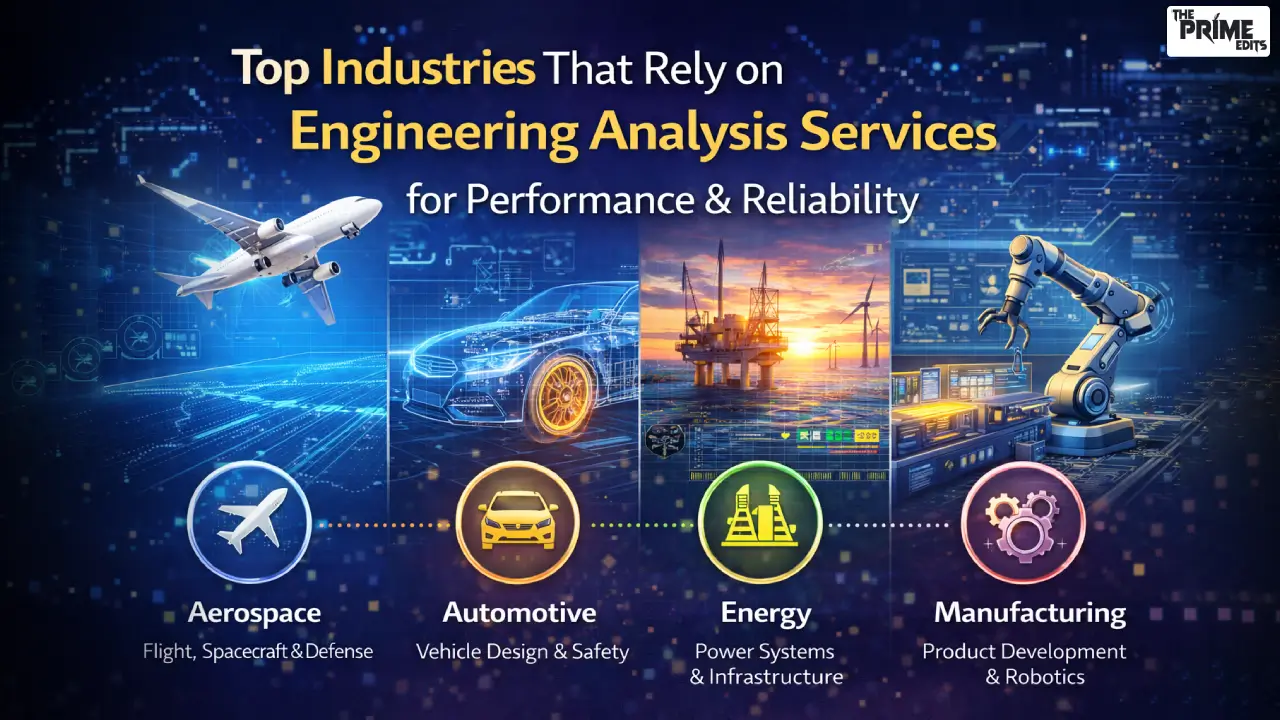
The success of a product or system in the modern dynamic world depends on two factors, which are performance and reliability. Businesses cannot afford unexpected failures or costly downtime. The need for engineering analysis services has become essential across all industries. The organization uses these services to assess risks, test designs, and enhance system efficiency before its products enter actual operational use.
At Dansob, we support businesses with structured engineering design and analysis solutions. Our focus areas include reliability engineering, system safety engineering, and maintenance engineering. Each discipline strengthens product life cycles and reduces operational uncertainty. In this blog, we explore the top industries that depend on these services to ensure performance and reliability.
Why Engineering Analysis Matters Across Industries
Modern systems are complex. They combine mechanical, electrical, and software components. A small design weakness can cause large operational losses.
Engineering analysis enables companies to:
- Identify potential failure modes early
- Improve safety and compliance
- Increase product lifespan
- Minimize the costs of maintenance
- Support analytical decision-making
Systems need to establish their reliability and safety parameters during their initial development phase. The process of fixing issues reactively leads to both high costs and dangerous outcomes.
1. Defense and Aerospace
Aircraft and defense equipment must comply with safety regulations and performance standards, which should remain in effect throughout their operational life, including precise functioning under severe weather conditions.
Why This Industry Needs Advanced Analysis
- High consequence of failure
- Complex integrated systems
- Long service life requirements
- Strict regulatory compliance
System reliability engineering functions as the essential element that enables the successful execution of missions. Engineers assess the effects of stress and fatigue, vibration, and environmental loads on system performance. The engineers perform an evaluation of redundancy systems and fault tolerance mechanisms.
System safety engineering identifies hazards before deployment. It ensures risks are reduced to acceptable levels. Maintenance engineering plans structured inspections and lifecycle support.
Without rigorous analysis, operational risk increases dramatically. Aerospace companies depend on data-driven validation to protect lives and assets.
2. Heavy Manufacturing
Heavy manufacturing includes steel plants and mining activities, along with large-scale production plants. The machines used here work around the clock and face severe working conditions.
Unplanned machine stops can halt entire production plants, which can adversely affect the company.
Key Challenges
- High mechanical stress on equipment
- Aging infrastructure
- Safety risks to workers
- Large-scale maintenance operations
Engineering analysis helps manufacturers understand load behavior and fatigue cycles. It supports predictive maintenance strategies. Reliability models identify components with high failure probability.
The maintenance engineering process helps to decrease unexpected equipment failures. The implementation of structured reliability programs leads to better asset performance while decreasing total operational expenses.
The industrial sector depends on performance consistency to achieve its financial success. Proactive analysis protects operations from avoidable disruptions.
3. Automotive and Transportation
The automotive and transportation industry experiences both high competitive pressure and multiple safety requirements that must be met. The performance requirements, the fuel efficiency standards, and the emission limits must be satisfied by vehicles.
Consumers expect safe and reliable vehicles. Any defect can lead to recalls and legal consequences.
Role of Engineering Analysis in Automotive Systems
- Crash and structural integrity evaluation
- Thermal and stress analysis of components
- Reliability modeling of electrical systems
- Safety assessment of control systems
System reliability engineering ensures vehicles perform consistently across operating conditions. Engineers evaluate how components work together and determine their failure probabilities.
System safety engineering creates safer operational conditions by reducing hazards that exist in braking systems, steering mechanisms, and autonomous technologies. Maintenance planning helps both fleet operators and public transport systems.
Automotive companies rely on analysis to balance innovation with reliability. Without it, market credibility suffers.
4. Energy and Utilities
Energy systems provide the essential power needed by contemporary society. Power plants and renewable energy farms, together with utility networks, require continuous operational capability. System failures can affect millions of people.
The energy infrastructure system requires substantial financial investment because of its complicated technical design. The organization needs to establish effective methods for handling potential hazards.
Why Energy Companies Depend on Engineering Analysis
- Continuous operation requirements
- High safety and environmental risks
- Long-term infrastructure investments
- Strict regulatory oversight
Engineering analysis evaluates structural loads in turbines and pipelines. It supports fatigue and corrosion assessments. Reliability models predict component degradation over time.
Maintenance engineering creates inspection intervals based on real performance data. This reduces unnecessary maintenance while preventing catastrophic failures.
System safety engineering protects workers and the surrounding communities. It ensures compliance with safety standards.
For the energy sector, reliability equals trust. Analysis strengthens operational resilience and asset longevity.
5. Consumer Product Design
Consumer products require easy-to-understand designs of complex functionalities, which designers must create through their professional knowledge. Designers need to ensure that electronic devices, home appliances, and domestic products operate safely throughout their entire operational lifespan.
Product failures damage brand reputation quickly. Modern consumers expect high quality and durability.
How Analysis Improves Consumer Products
- Stress and durability testing
- Thermal performance evaluation
- Electrical reliability assessment
- Safety risk analysis
Engineering analysis helps designers optimize materials and structures. It reduces overdesign while maintaining strength. Reliability programs prevent early life failures.
System safety engineering ensures products meet regulatory standards. Maintenance considerations influence serviceability and product lifespan.
Consumer brands use structured engineering analysis services to maintain quality in competitive markets.
6. Medical Devices
Medical devices function in environments that are essential for saving human life. The equipment needs to function without defects, which includes its imaging systems, implants, and monitoring devices.
Critical Needs in the Medical Sector
- Patient safety assurance
- High reliability in critical operations
- Regulatory validation
- Long-term performance stability
System reliability engineering supports failure mode analysis and risk quantification. Engineers assess materials, loads, and electronic stability.
System safety engineering identifies hazards that could affect patients or operators. Maintenance engineering ensures consistent equipment calibration and uptime.
The performance of healthcare systems directly impacts human life. Analytical validation protects patients and manufacturers through its protective measures.
7. Industrial Equipment
Industrial equipment includes pumps, compressors, robotics, and automation systems. Modern production environments depend on these machines as their fundamental operational components. The loss of operational capacity results in decreased work output and reduced company earnings.
Engineering Analysis in Industrial Equipment
- Load and vibration analysis
- Reliability modeling of moving parts
- Risk assessment of control systems
- Lifecycle maintenance planning
System reliability engineering improves the mean time between failures. Engineers identify weak links and optimize component selection.
Maintenance engineering supports predictive maintenance strategies. Data-driven inspection schedules reduce unnecessary servicing.
System safety engineering prevents hazards in automated environments. It ensures machines operate safely alongside human workers.
Industrial equipment manufacturers use engineering analysis services to enhance performance and build durable systems.
The Strategic Value of Engineering Analysis
Across all industries, three engineering disciplines remain fundamental:
- Reliability Engineering
Focuses on consistent system performance over time. - System Safety Engineering
Identifies and mitigates hazards before deployment. - Maintenance Engineering
Develops structured lifecycle support strategies.
The disciplines produce measurable results because they convert assumptions into scientific evidence. The processes work to decrease uncertainty while they enhance the accuracy of decision-making.
Businesses that choose to spend money on analytical methods have:
- Lower lifecycle costs
- Reduced downtime
- Improved safety compliance
- Higher customer trust
- Stronger market positioning
Performance and reliability do not happen by chance. They result from disciplined engineering processes.
Conclusion
Performance and reliability define modern industrial success. Every sector discussed in this blog depends on structured analysis to reduce risk and improve outcomes.
System reliability engineering maintains performance standards from aerospace missions through to consumer products. System safety engineering protects both human life and valuable assets. Maintenance engineering establishes operational stability for extended periods.
Industries cannot rely on assumptions. They require validated engineering insights.
Engineering analysis services provide that foundation. They convert uncertainty into measurable confidence.
At Dansob, we assist businesses in developing systems that provide both reliable performance and safe operation while creating long-lasting value.
FAQs
Why do modern industries take engineering analysis services critically?
Engineering analysis services enable businesses to detect risks at an early stage, improve performance, and prevent failures at a significantly lower cost.
Which sectors benefit from utilizing engineering analysis services?
The industries that benefit the most from structured analysis are aerospace, automobile, energy, manufacturing, medical devices, consumer products, and industrial equipment.
What is the role of system reliability engineering?
System reliability engineering makes sure products and systems work reliably over time under normal conditions.
How does system safety engineering support businesses?
It finds possible hazards in design and operation, helping companies lower risks and comply with safety rules.
How can Dansob support my business with engineering analysis?
We offer reliability, safety, and maintenance engineering solutions that boost performance, cut downtime, and support long-term operational stability.