
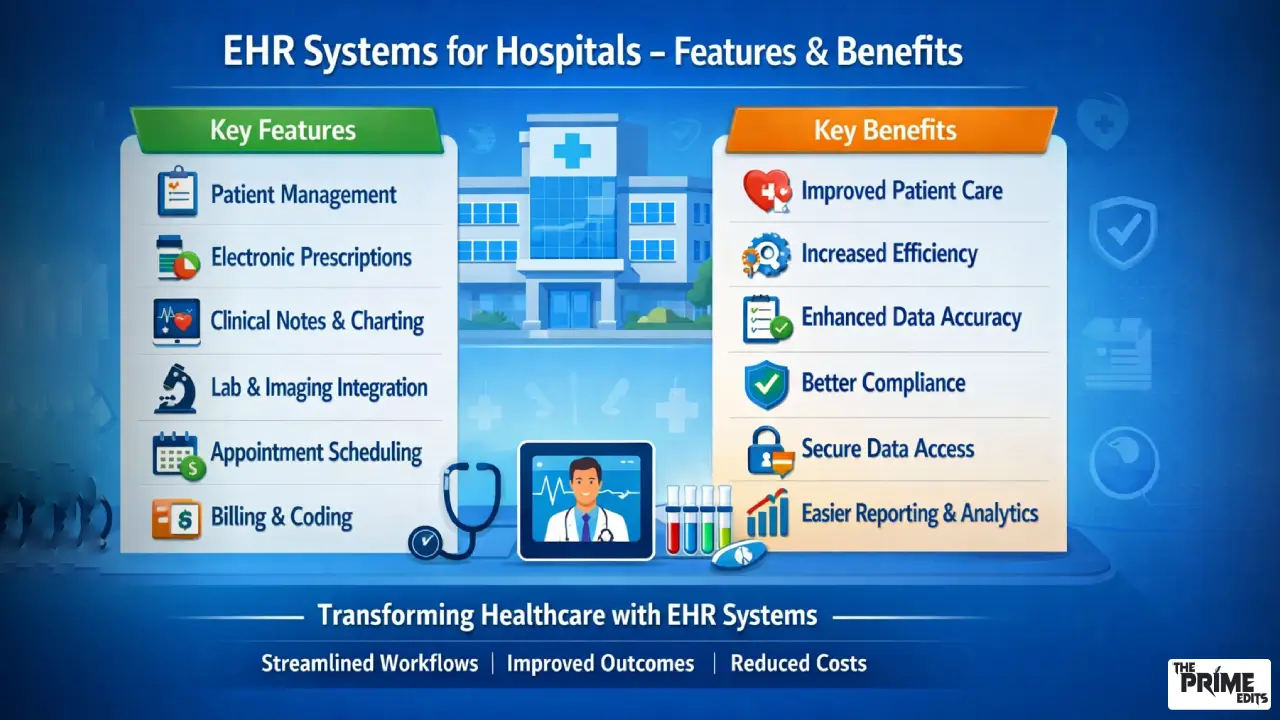
Healthcare organizations generate enormous volumes of patient data every day. The effective management of that information becomes essential to delivering high quality patient care, improving operational performance, and ensuring regulatory compliance. EHR systems for hospitals provide essential support at this point.
Electronic Health Record technology has transformed how hospitals collect, manage, and use patient data. Hospitals can now centralize clinical information through digital systems, which allow them to optimize their operational processes and improve decision-making through access to precise information.
At Hart, we help healthcare organizations modernize their data infrastructure and unlock the full potential of their EHR systems. Our platform connects, organizes, and activates healthcare data across multiple systems so hospitals can focus on what matters most: patient care.
In this article, we will explore the key features and benefits of ehr systems for hospitals, and how our solutions help healthcare organizations overcome data fragmentation and build a unified healthcare data environment.
Understanding EHR Systems for Hospitals
Introduction to EHR platforms.
Electronic Health Record platforms are computer-based applications that serve the main purpose of digitizing and organising patient records in a healthcare setting. Such a system can record various types of data, including medical history, test results, medications, diagnoses, radiology reports, and doctors’ notes.
What do hospital EHRs include?
Hospital EHRs today go way beyond simple digital patient records. They are integrated solutions that help healthcare professionals make clinical decisions, improve hospital operations, and engage in healthcare analytics.
Challenges of using different EHRs.
In reality, hospital departments, clinics, or even partner organizations usually have different EHR systems. This can cause a situation where patient records are not completely integrated, and important information is spread across various systems.
Reasons why hospitals need sophisticated EHR systems
Hospitals face more and more challenges to improve their patients’ results, reduce their spending and keep up with the changing rules. Electronic health record (EHR) systems in hospitals, if utilized properly, support healthcare professionals in achieving these objectives by providing them with secure and continuous patient data even during different stages of a patient’s treatment.
If not have a consolidated data plan, hospitals mostly end up facing the following issues:
- Disconnected patient records across systems
- Duplicate or incomplete healthcare data
- Slow data retrieval and reporting processes
- Limited interoperability between platforms
- Increased IT complexity and operational costs
Our platform is designed to simplify this environment. We unify data from multiple electronic medical record systems and create a single reliable foundation for healthcare organizations to work from.
Key Features of Modern EHR Systems for Hospitals
Hospitals need electronic health record systems which provide interoperability and security, scalability, and real time data access. The following listing identifies essential elements that modern electronic health record systems must deliver to hospitals.
1. Unified Healthcare Data Integration
One of the major features of today’s EHR systems is their capability to integrate information from various sources.
Often, various hospital departments depend on different electronic health records vendors. These systems churn out a lot of clinical and operational data that have to be collected and uniformed.
Hart connects directly to EHR platforms, clinical systems, and databases via open standards like FHIR, HL7, and C, CDA, for example. We can integrate information from different sources and produce an inclusive patient record as a result.
2. Longitudinal Patient Record Creation
Hospitals require a complete view of a patient’s medical history to deliver effective care.
Advanced ehr systems for hospitals aggregate patient data across multiple encounters, facilities, and clinical systems. This creates a longitudinal patient record that allows clinicians to access years of medical history in one place.
Our platform normalizes and validates healthcare data to ensure accuracy and consistency across the entire patient journey.
3. Secure Data Storage and Compliance
Patient data security is a top priority for healthcare organizations. EHR platforms must protect sensitive health information while maintaining compliance with industry regulations.
We implement security frameworks that include:
- End to end data encryption
- Role based access controls
- Continuous audit logging
- Compliance aligned storage and governance
These safeguards ensure that healthcare data remains protected while still accessible to authorized users.
4. Real Time Data Access and Streaming
Timely access to patient information can significantly impact clinical outcomes. Modern ehr systems for hospitals enable real time data streaming so clinicians can access updated records immediately after clinical events.
Our solutions support automated data updates and continuous data synchronization. This ensures that healthcare providers always have access to the most accurate and up to date information.
5. Vendor Agnostic Integration
For instance, it is a known fact that healthcare institutions do not limit themselves to a single EHR vendor. Actually, they may have members of different EHR systems in separate functional areas and facilities.
In order to facilitate operation across a variety of healthcare technologies, we developed our platform to be vendor agnostic. Meaning, a hospital can collect and integrate patient information from different systems without having to change their workflow. This is how a non, biased vendor works.
Such a level of adaptability allows an institution to be able to grow, bring on new tools, and cope with a highly complex healthcare community without any major problems.
6. EHR Migration and Data Transformation
Hospitals frequently upgrade or replace legacy systems. Migrating healthcare data from old platforms to modern ehr systems for hospitals can be complex and time consuming.
Our migration solutions help hospitals securely extract and transfer clinical and financial data from legacy systems to new platforms. This ensures that valuable patient history remains accessible and accurate during system transitions.
7. Healthcare Data Archiving
Even after an EHR system is replaced, hospitals must retain historical patient records for compliance and clinical reference.
Our archival solutions help healthcare organizations consolidate legacy electronic medical record systems into a secure and searchable archive. This allows hospitals to decommission outdated systems while maintaining access to historical records.
Benefits of EHR Systems for Hospitals
If implemented effectively, hospital ehr systems can lead to remarkable benefits for healthcare organizations.
Enhanced Patient Care
Clinicians can make better decisions with access to comprehensive patient data. Reliable information supports accurate diagnosis, effective treatment, and smooth communication among care providers.
Increased Workplace Productivity
Transitioning from paper charts to electronic ones not only cuts down paperwork but also makes hospital work processes more efficient and less stressful for staff.
Better Data Driven Insights
Advanced analytics and reporting tools allow hospitals to analyze healthcare data, identify trends, and improve operational performance.
Reduced IT Complexity
By consolidating healthcare data across multiple electronic health records software platforms, hospitals can simplify their IT infrastructure and reduce system maintenance costs.
Support for Healthcare Innovation
Unified healthcare data enables hospitals to adopt advanced technologies such as artificial intelligence, predictive analytics, and population health management.
How Hart Helps Hospitals Maximize EHR Value
At Hart, we specialize in solving one of healthcare’s biggest challenges: fragmented data across multiple EHR systems.
Our platform provides a complete solution for healthcare data integration, migration, activation, and archival. We unify clinical, financial, and operational data into a single trusted data foundation.
With our technology, hospitals can:
- Integrate multiple ehr systems for hospitals into one unified platform
- Access longitudinal patient records across facilities
- Stream healthcare data to analytics and AI systems
- Reduce vendor complexity and IT overhead
- Improve compliance and data governance
Our goal is simple. We help healthcare organizations transform fragmented data into a powerful strategic asset.
The Future of EHR Systems in Healthcare
Healthcare keeps changing a lot these days, with hospitals using the latest technologies and new ways of digitizing their processes. Hospitals’ next generation ehr systems will be designed around interoperability, smart analytics, and effortless access to data.
In the future, hospitals will count more and more on integrated healthcare data platforms, which are able to link electronic medical record systems, medical equipment, research databases, and population health tools.
At Hart, we are committed to helping healthcare organizations build that future. Our platform ensures that healthcare data is not just stored, but activated and used to improve care delivery and innovation.
Faq’s
What are ERP systems for hospitals?
Hospital ERP systems are electronic platforms for recording and managing patient health data. They consist of medical history diagnostics test results, medications, imaging data, and clinical documentation.
Exactly why have EHR systems become critical for hospitals?
They allow hospital doctors to provide a higher quality of care through precise and timely access to patient data. Also, EHRs streamline the running of a hospital, reduce paperwork and help decision-making to be based on solid data.
How does EHR create a chain of care for a patient?
Since all patient records are maintained electronically in one place, doctors and nurses can not only swiftly but also have 24×7 access to patients’ medical history, lab results, and current treatments. Consequently, they are able to make clinical decisions rapidly as well as precisely.
Is it possible for hospitals to have several EHR systems?
Certainly. Leading solutions such as Hart enable hospitals to link various electronic health record software systems and build a single patient data environment.
What is Hart’s approach to EHR data integration?
We establish direct connections with clinical systems, databases, and applications based on industry standards. Our solution performs healthcare data aggregation, normalization, and validation to produce a single reliable information source.
Do EHR systems have robust security measures?
Absolutely. Current hospital IBM EHR systems are furnished with sophisticated security features like encryption, role-based access controls, and audit logging to safeguard patient data and ensure compliance with regulations.